
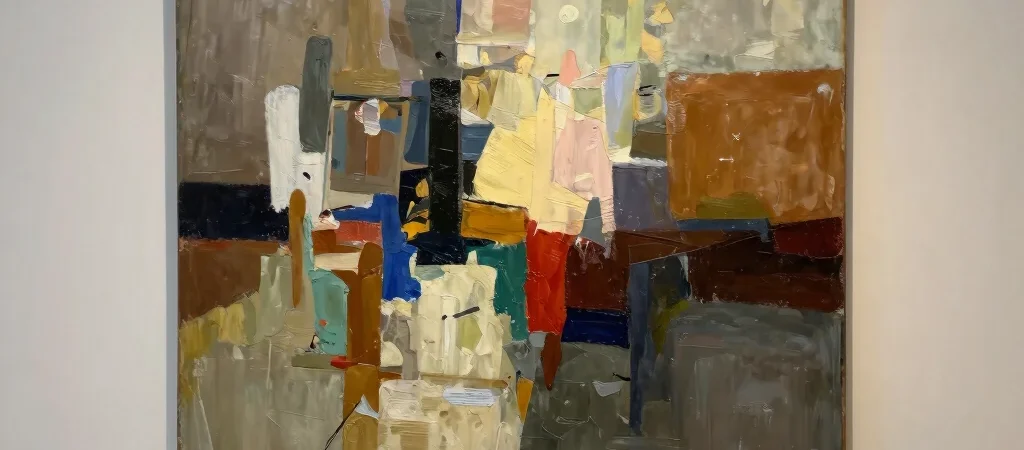
You stop in front of a painting because something catches your eye: a sharp patch of blue, a quiet face, or a shape that feels slightly out of place. Stay for another moment. Looking closely is less about finding a hidden answer than noticing how the work guides your attention.
Start with the whole
Take in the painting from a little distance before focusing on details. Notice where your eye lands first, where it moves next, and whether the composition draws you toward the center or out to an edge. Those movements are part of the work’s structure, not just your reaction to it.
Then consider the balance of the image. A large form may be answered by a small bright mark; an open area may make a dense cluster feel even more concentrated. You do not need technical vocabulary to see these relationships—just time to let them register.
Follow color and surface
Color can set a mood, but it also creates practical relationships: warm tones may press forward while cooler ones recede, and a single contrasting accent can reorganize the whole scene. Look for colors that repeat in different places. Their echoes can connect forms that first seemed unrelated.
Surface offers another kind of evidence. Visible brushwork, a smooth passage, or a layered edge tells you something about how the image was built, even when the full process is unknown. Look at how the paint meets the boundary of a shape; a crisp edge and a softened one create very different kinds of attention.
Let context add another layer
An artist feature can add context about materials, influences, or working methods, but it need not settle what a painting means. Let the work make its first impression before turning to the maker’s story. Then return to the painting and see what you notice differently.
A useful visit does not require a final interpretation. Choose one detail you had missed at first and carry it with you: a recurring color, a changed edge, or the way empty space holds its place. That is often enough to make a second look feel new.